





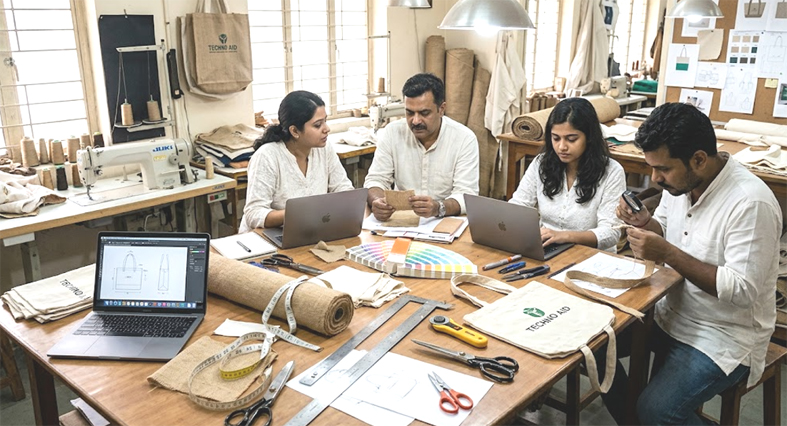
When we started manufacturing and exporting bags from Kolkata back in 2006, sustainability was a niche requirement. Today, it’s a global mandate. Operating an ISO 9001:2015 certified unit, we’ve shipped jute, cotton, and canvas bags to buyers across more than 23 countries.
While being based in Kolkata gives us a direct structural advantage for sourcing raw jute and textiles, having material is only half the battle. The real work happens before a single roll of fabric is even cut.
Product Development: Moving Beyond Guesswork
With a catalogue of over 1,000 designs, people often ask how we keep up with global demands. The truth is simple: we don’t guess what the market wants. We have spent two decades building a structured, data-driven product development process that bridges the gap between a buyer’s vision and factory-floor reality.
Here is exactly how a product moves from a concept to a production-ready bulk order:
1. Market Research & Trend Mapping (Spotting the Trends Early)
Our development process be its jute promotional bags or canvas tote bags doesn’t start with sketchpads; it starts with data. Our team continuously monitors shifting plastic ban regulations across Europe and North America, retail sourcing trends in Asia, and direct feedback from our network of international importers.
We look at macro-level shifts. For instance, if a major European supermarket chain alters its automated checkout geometry, it changes the required gusset depth of a reusable tote. By tracking these subtle shifts in consumer habits and supply chain logistics, we adapt our designs months before the wholesale market even realizes the demand has peaked.
2. Technical Design & Cost Optimization (Designing for the Real World)
A beautiful bag is a failure if it tears under weight or drives production costs so high that it ruins your retail margins. When we design, we focus heavily on the structural mechanics and commercial viability of the product:
- The GSM-to-Load Ratio: We calculate the exact fabric weight (GSM) required for the bag’s intended use. A promotional giveaway bag requires a different structural threshold than a premium, heavy-duty grocery tote. We ensure buyers don’t overpay for unnecessary fabric weight while guaranteeing the bag won’t fail.
- Fabric Yield & Wastage Optimization: This is where factory experience matters. Our design team creates cutting patterns that maximize fabric utilization from standard loom widths (like 46-inch or 48-inch jute rolls). By minimizing scrap fabric during the cutting phase, we pass direct cost savings on to our buyers.
- Handle Engineering: The handle is the most common failure point on a reusable bag. We engineer the attachment point based on load expectations—whether using heavy-duty “X” box-stitching, reinforced rivets, or internal cotton padded ropes. We also adjust handle lengths to ensure ergonomic comfort when the bag is fully loaded.
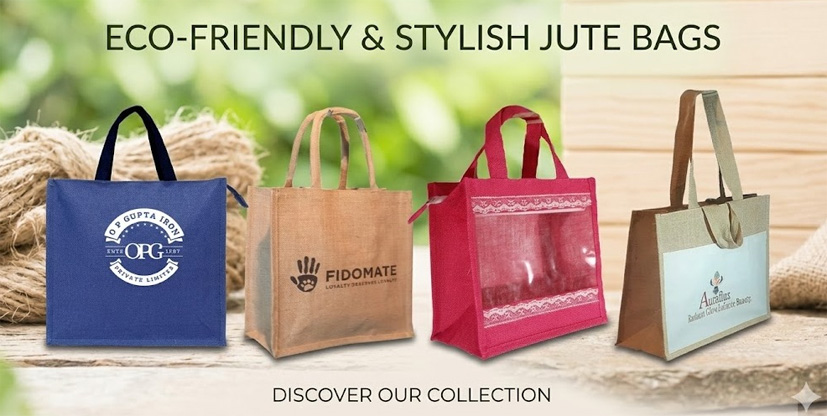
3. Rigorous Sampling & The Factory Floor Test
Before a single bulk order gets greenlit for the main production lines, a physical prototype is handmade in our dedicated sampling department. This is where we stress-test our own engineering under real-world conditions.
- Stitch Density & Seam Integrity: We test various thread types (like high-tenacity polyester or nylon blends) and adjust the stitches-per-inch (SPI) to prevent seam slippage, especially on coarser fabrics like jute.
- Ink Adhesion & Registration: We test how specific water-based or azo-free inks behave on the textured surface of the fabric. Intricate logos are checked under magnification to ensure zero bleeding, crisp lines, and excellent wash/rub fastness.
- Dimensional Stability: Natural fibers stretch and pull under tension. We measure the sample before and after it undergoes finishing processes (like lamination or heat curing) to ensure the final product matches the buyer’s exact requested dimensions down to the millimeter.
If a sample doesn’t feel right, look pristine, or handle the weight, it goes back to the drawing board. We iterate until it is flawless.
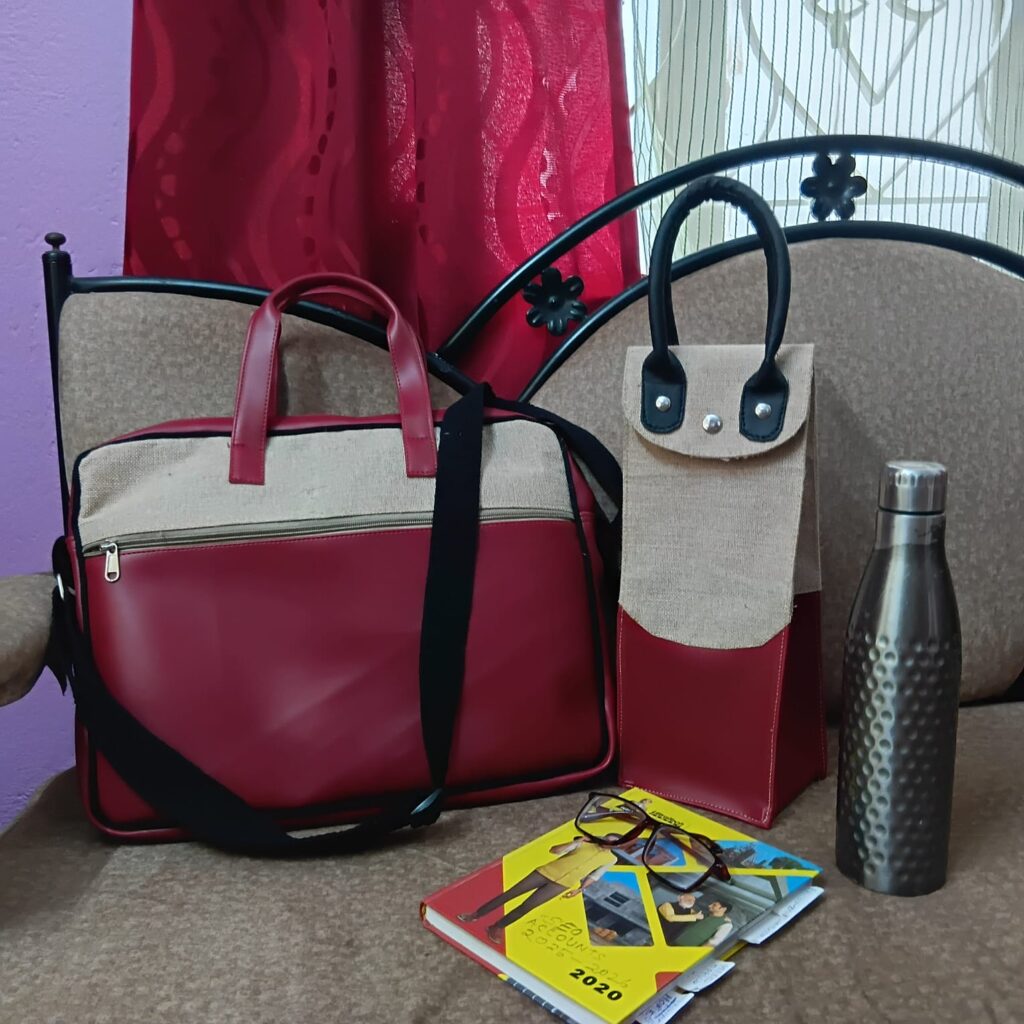
Sustainable Processing & Compliance
True sustainability happens on the production floor, not just on the fabric tag. In our facility, we prioritize azo-free dyes and water-based printing inks to reduce environmental impact and protect our workers.
Furthermore, international trade requires concrete proof. Depending on your destination market, we work closely with your procurement teams to ensure compliance with global standards, managing production lines that align with GOTS for organic cotton, Fair Trade principles, or Oeko-Tex certifications.
FAQ (Frequently Asked Questions):
Kolkata is at the center of the global jute industry, offering access to high-quality raw materials, experienced manufacturing expertise, and competitive pricing.
Yes. We offer customization options including printing, embroidery, sizing, lamination, packaging, and private labeling.
Yes. We manufacture both conventional cotton and GOTS-certified organic cotton bags based on buyer requirements.
MOQ varies depending on the material, design complexity, and customization requirements. Please contact us for project-specific details.
About Us (who we are) :
Based in Kolkata, India, we have been manufacturing and exporting jute bags, cotton bags, canvas bags, non-woven bags, and tote bags since 2005. With over 1,000 designs in our catalogue, we supply wholesale buyers, importers, retailers, and brands across India and international markets.
Conclusion Techno Aid transforms raw jute into premium, export-grade bags using precise cutting, eco-friendly printing, and reinforced stitching—guaranteeing sustainable durability that meets global standards.
Ready to elevate your brand sustainably? Contact Techno Aid(eco bags division) today for premium, custom-designed jute bags tailored to your business needs and join the global eco-friendly movement!