





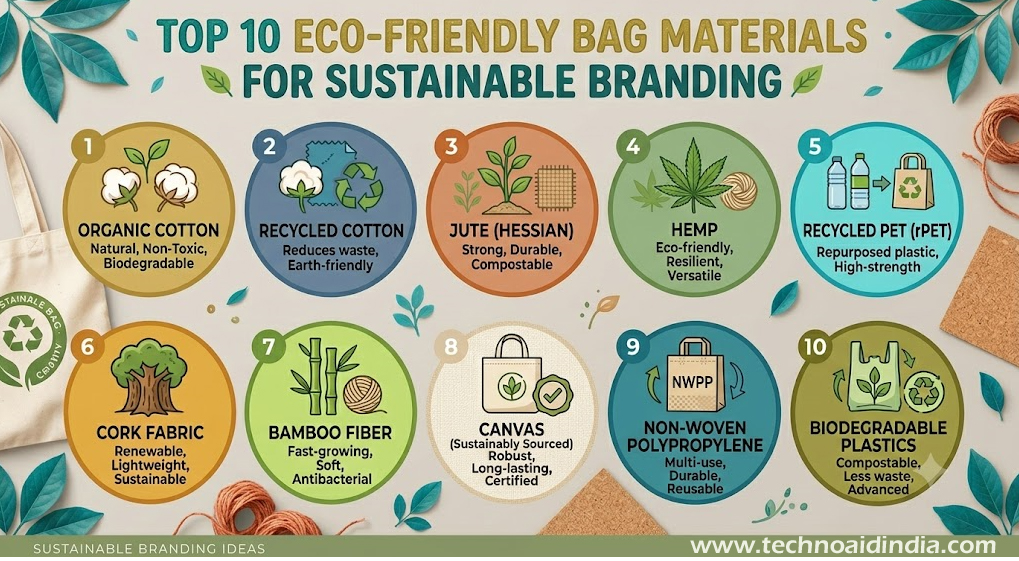
Eco-Friendly Promotional Bags: Top 10 Materials for Sustainable Branding Success
Sustainability is no longer a niche marketing trend. Customers, employees, and business partners increasingly expect brands to make environmentally responsible choices. As a result, eco-friendly promotional products have become an important part of modern branding strategies.
Among all promotional products, reusable bags continue to deliver exceptional value. They are practical, visible, and used repeatedly in everyday life. However, not all promotional bags are created equal. The material used can significantly affect durability, environmental impact, customer perception, and overall brand value.
Having worked in the promotional products industry for more than two decades, we have seen a clear shift in customer preferences. Twenty years ago, cost was often the primary consideration. Today, many organizations actively ask about recycled content, sustainable sourcing, and environmental certifications before placing an order.
This guide explores ten of the most popular eco-friendly bag materials used in promotional products and explains where each material performs best.
What Makes a Bag Material Eco-Friendly?
A bag material is generally considered eco-friendly when it helps reduce environmental impact compared to conventional alternatives.
Factors to consider include:
- Renewable raw materials
- Recycled content
- Biodegradability
- Energy and water consumption during production
- Product lifespan and reusability
- End-of-life disposal options
One important point that is often overlooked is durability.
Expert Insight
Many buyers focus exclusively on whether a material is biodegradable. In practice, durability is equally important. A reusable bag that remains in service for several years may create less environmental impact than a biodegradable bag that is used only a few times before disposal.
For promotional products, the most sustainable bag is often the one that customers continue using long after the original marketing campaign has ended.
1. Organic Cotton
Organic cotton remains one of the most recognized eco-friendly materials in the promotional products industry.
Unlike conventional cotton, organic cotton is grown without synthetic pesticides and fertilizers. The result is a natural fiber that appeals strongly to environmentally conscious consumers.
Why Brands Choose Organic Cotton
- Premium appearance
- Excellent print quality
- Strong customer perception
- Renewable natural fiber
From our experience, organic cotton bags are particularly popular among corporate sustainability programs, educational institutions, and premium retail brands.
2. Recycled Cotton
Recycled cotton is produced using textile waste that would otherwise enter the waste stream.
This material helps reduce demand for virgin cotton production while supporting circular economy initiatives.
Best Applications
- Retail promotions
- Employee welcome kits
- Conference giveaways
- Sustainability-focused campaigns
Many buyers appreciate recycled cotton because it combines familiar comfort with a clear sustainability message.
3. Jute
Jute has long been one of the most recognizable eco-friendly bag materials.
Its natural woven appearance immediately communicates environmental responsibility, making it a favorite for retailers and grocery brands.
Advantages
- Biodegradable
- Strong and durable
- Renewable crop
- Distinctive natural appearance
Industry Observation
Many consumers identify jute bags as “eco-friendly” at first glance. This instant visual association makes jute particularly effective for sustainability-focused marketing campaigns.

4. Hemp
Hemp is one of the strongest natural fibers available.
It requires relatively little water and can be cultivated with fewer agricultural inputs than many traditional textile crops.
Key Benefits
- Exceptional durability
- Renewable resource
- Long product life
- Natural appearance
For brands looking to emphasize long-term sustainability, hemp remains an excellent option.
5. Recycled PET (rPET)
rPET is manufactured from recycled plastic bottles and other recycled PET materials.
Rather than becoming waste, these materials are transformed into durable fabric suitable for promotional bags.
Why rPET Continues to Grow
- Supports recycling initiatives
- Durable and lightweight
- Suitable for high-volume campaigns
- Excellent branding surface
Many companies specifically choose rPET to communicate their commitment to reducing plastic waste.
6. Cork Fabric
Cork fabric offers a unique premium appearance that stands out from conventional promotional materials.
Harvesting cork does not require cutting down the tree, making it a renewable resource.
Best Uses
- Executive gifts
- Luxury branding campaigns
- Premium promotional products
Although less common than cotton or jute, cork can create a memorable brand impression.
7. Bamboo Fiber
Bamboo’s rapid growth makes it an attractive renewable resource.
Bamboo-based textiles continue to gain popularity among brands associated with wellness, health, and sustainability.
Advantages
- Fast-growing renewable resource
- Lightweight
- Attractive appearance
- Positive environmental perception
8. Sustainable Canvas

Canvas has become one of the most widely used materials for reusable promotional bags.
The biggest advantage of canvas is longevity.
Why Canvas Remains Popular
- Heavy-duty construction
- Large print area
- Premium appearance
- Long-term brand exposure
Expert Insight
A well-constructed canvas bag may remain in use for years. From a branding perspective, every additional use increases the return on investment from the original promotional campaign.
9. Non-Woven Polypropylene
While not biodegradable, reusable non-woven polypropylene bags can still offer environmental benefits when used repeatedly.
Their affordability makes them popular for large-scale events and trade shows.
Best For
- High-volume giveaways
- Event promotions
- Budget-conscious campaigns
The sustainability value depends largely on repeated use.
10. Recycled Polyester
Recycled polyester helps reduce demand for virgin petroleum-based materials while delivering excellent durability.
Advantages
- Strong and lightweight
- Good print quality
- Suitable for frequent use
- Supports recycling initiatives
Many outdoor and travel brands prefer recycled polyester because of its performance characteristics.
Comparison Table
| Material | Renewable | Recycled Content | Biodegradable | Durability | Cost Level |
|---|---|---|---|---|---|
| Organic Cotton | Yes | No | Yes | High | High |
| Recycled Cotton | No | Yes | Yes | High | Medium |
| Jute | Yes | No | Yes | High | Medium |
| Hemp | Yes | No | Yes | Very High | High |
| rPET | No | Yes | No | High | Medium |
| Cork Fabric | Yes | No | Partially | High | High |
| Bamboo Fiber | Yes | No | Yes | Medium | Medium |
| Canvas | Depends | Possible | Depends | Very High | Medium-High |
| Non-Woven PP | No | No | No | Medium | Low |
| Recycled Polyester | No | Yes | No | High | Medium |
Choosing the Right Material
There is no single “best” eco-friendly bag material.
The right choice depends on your objectives:
- Premium branding → Organic Cotton, Hemp, Cork
- Retail promotions → Jute, Canvas, Recycled Cotton
- Events and trade shows → rPET, Non-Woven PP
- Sustainability campaigns → Recycled Cotton, rPET, Hemp
The most successful promotional products balance sustainability, durability, practicality, and cost.
Frequently Asked Questions
There is no universal answer. Organic cotton, hemp, jute, and recycled materials all offer environmental benefits. The most sustainable choice often depends on how long the bag will be used.
Both have advantages. rPET helps divert plastic waste from landfills, while cotton offers a natural fiber option. The best choice depends on your sustainability goals and intended use.
Canvas, organic cotton, recycled cotton, and jute remain among the most popular choices because they combine durability, branding potential, and customer appeal.
A quality promotional bag can remain in use for several years. Durability varies depending on material, construction quality, and usage patterns.
Is biodegradable always better?

Conclusion
Eco-friendly promotional bags have evolved from simple giveaways into powerful branding tools. The right material can strengthen a company’s sustainability message while delivering long-term visibility and practical value.
Based on industry experience, the most successful promotional bags are not simply those made from sustainable materials—they are the ones customers continue to use. Whether choosing organic cotton, recycled PET, hemp, jute, or canvas, businesses should focus on durability, usability, and genuine environmental responsibility.
When sustainability and practicality are combined, promotional bags can create lasting brand impressions while supporting broader environmental goals.
References & Further Reading
Textile Exchange – https://textileexchange.org
Forest Stewardship Council (FSC) – https://fsc.org
United Nations Environment Programme (UNEP) – https://www.unep.org
Organic Cotton Information Hub – https://textileexchange.org/organic-cotton
Additional background information:
https://en.wikipedia.org/wiki/Organic_cotton
https://en.wikipedia.org/wiki/Jute
https://en.wikipedia.org/wiki/Hemp
About the Author: This article is written by Bidyut Dey, who has over 20 years of practical experience in export-import business. The information shared here is based primarily on real business experience, supported by continuous learning and research. You can learn more about my professional background, experience, and verification links on my About Bidyut Dey page.